
When you look at a finished bathroom vanity, you usually see the part that matters most to the end user: the design.
The color, the drawers, the countertop, the sink and the overall shape.
But behind a finished aluminum bathroom vanity is a manufacturing process that is quite different from traditional wooden bathroom furniture.
An aluminum vanity is not simply a metal box.
The material, panel construction, cutting, connections, surface finish, hardware and final assembly all affect how the cabinet looks and performs after installation.
So, how is an aluminum bathroom vanity actually made?
Let’s take a look at the process from the panel to the finished cabinet.
1. It Starts With the Right Aluminum Panel
The first step is choosing the right material.
For aluminum bathroom furniture, the cabinet may be constructed using different types of aluminum panels and structural components depending on the design.
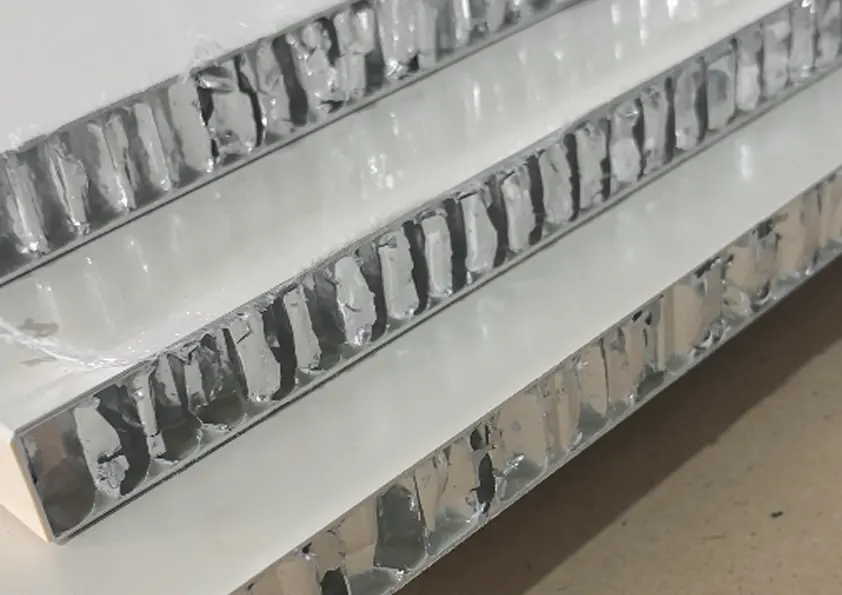
One option commonly used for lightweight furniture construction is aluminum honeycomb panel.
An aluminum honeycomb panel has aluminum skins on the outside with a honeycomb structure inside.
The basic idea is simple:
Use a lightweight core structure to provide rigidity without making the entire panel solid aluminum.
This makes the panel suitable for furniture applications where weight, strength and transportation efficiency all matter.
For a bathroom vanity, the panel thickness, honeycomb structure, surface finish and overall construction need to be considered together.
The material specification is only the starting point.
2. Cutting the Panels to Size
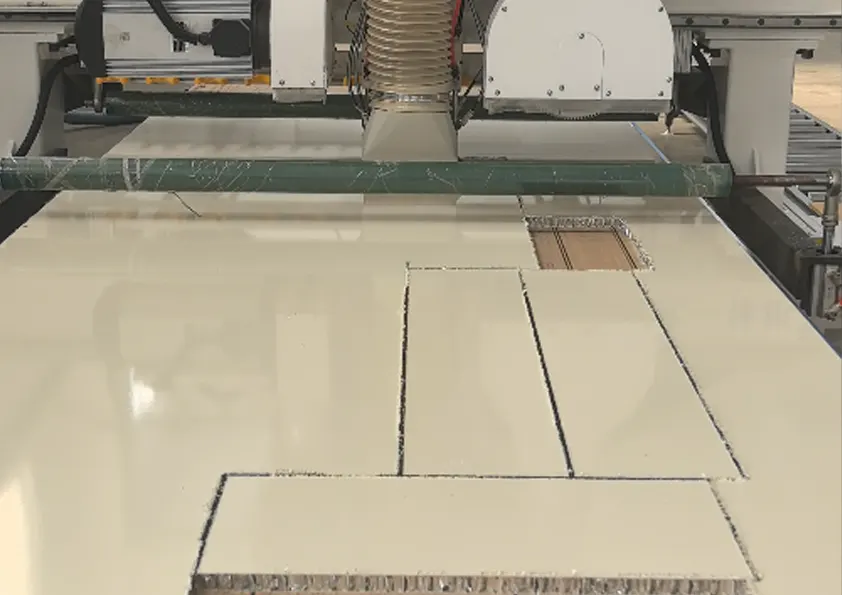
Once the cabinet design is confirmed, the panels need to be cut according to the required dimensions.
A bathroom vanity may contain many individual parts:
- Side panels
- Top and bottom panels
- Back panels
- Drawer components
- Door panels
- Internal partitions
- Supporting components
For custom bathroom vanities, dimensions can vary from one project to another.
This is one reason accurate cutting is important.
A small dimensional error may not seem significant when looking at a single panel, but several small errors can become obvious when multiple panels are assembled together.
Good manufacturing starts with accurate dimensions.
3. Processing and Preparing the Panel Edges
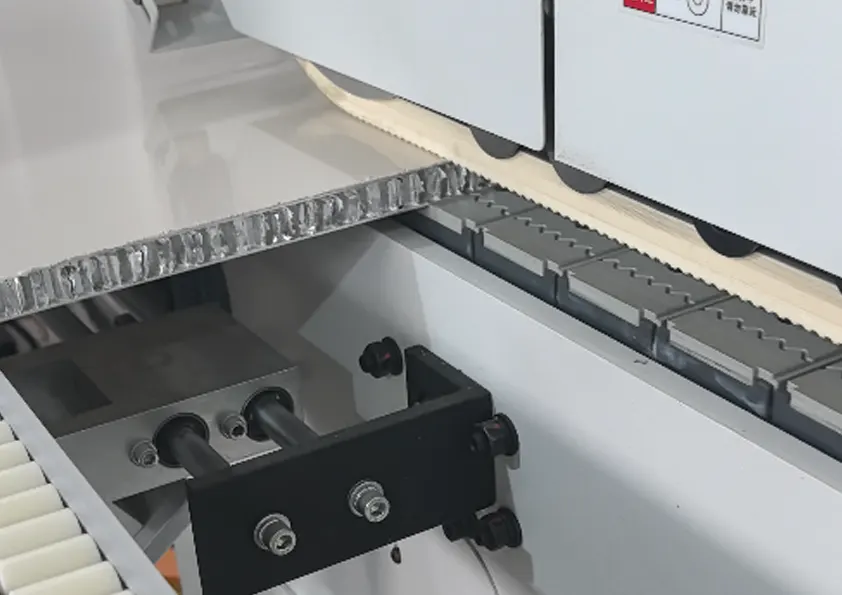
After cutting, the panel edges and connection areas need to be processed according to the cabinet structure.
This part is easy to overlook because it is mostly hidden after assembly.
But the hidden parts of a cabinet are often just as important as the visible surfaces.
The way panels are connected affects:
- Cabinet stability
- Appearance
- Installation
- Alignment
- Long-term use
For bathroom furniture, the structure also needs to work well around areas where water may be present.
The goal is not simply to make the panels fit together. The entire cabinet needs to work as one structure.
4. Building the Cabinet Structure
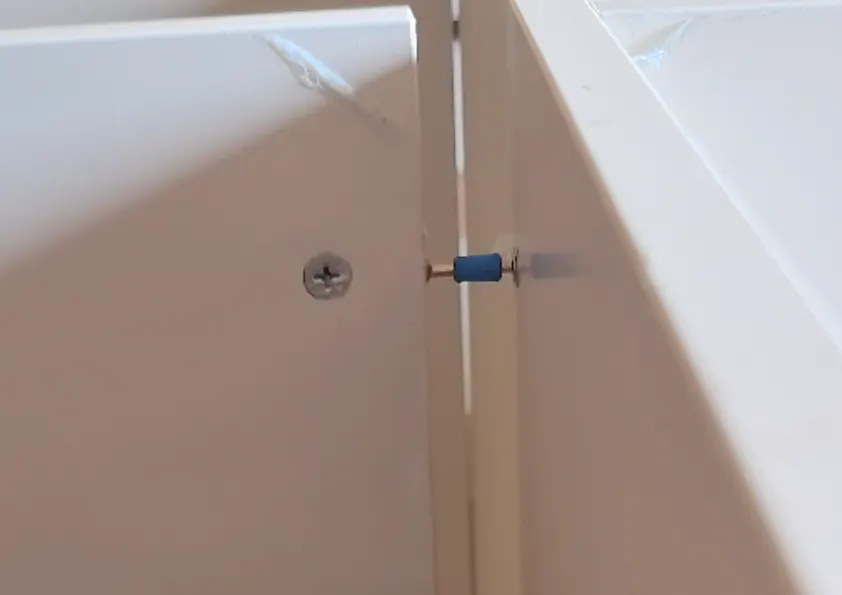
The individual panels are then assembled into the cabinet body.
Depending on the design, aluminum components and connecting systems can be used to create the cabinet structure.
This is where an aluminum bathroom vanity starts to look like a piece of furniture rather than a collection of panels.
Modern aluminum furniture does not have to look industrial.
With the right structure and surface treatment, the finished cabinet can have clean lines and a minimalist appearance similar to other modern bathroom furniture.
For wall-mounted vanities, structural strength is particularly important because the cabinet needs to support its own weight as well as the countertop, sink and items stored inside.
5. Surface Treatment Changes the Look of the Cabinet
One of the interesting things about aluminum furniture is the range of available finishes.
The same basic aluminum cabinet structure can look completely different depending on its surface treatment.
For example, aluminum bathroom vanities can be produced in:
- Solid colors
- Matte finishes
- Gloss finishes
- Wood-grain finishes
- Other decorative finishes
Powder coating is one option for creating durable colored surfaces.
Decorative films can also be used to create different visual effects, including wood-grain appearances.
This means choosing aluminum does not necessarily mean choosing a silver or metallic-looking bathroom cabinet.
A modern aluminum bathroom vanity can be designed to fit a wide range of interior styles.

6. Installing Drawers, Doors and Hardware
The cabinet body is only part of the finished vanity.
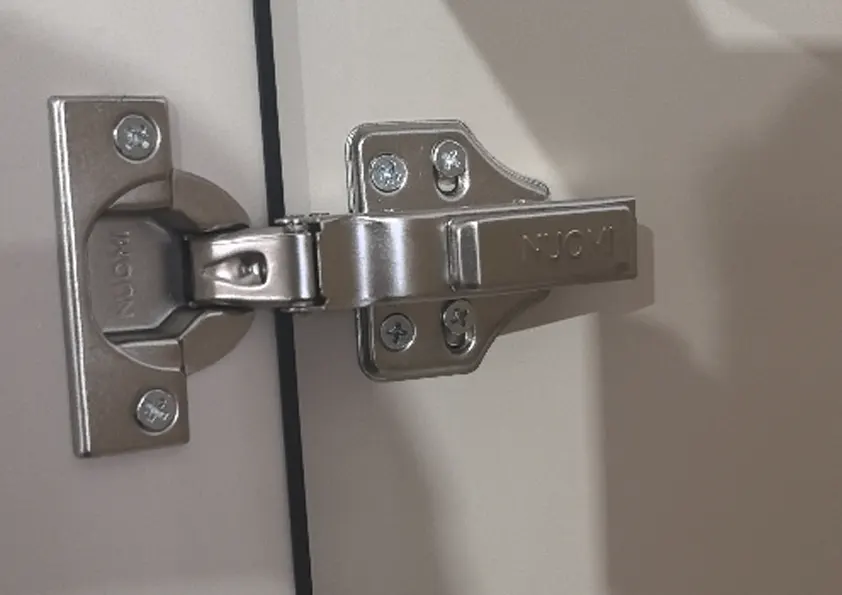
Drawers, doors, hinges, drawer slides, handles and other hardware need to be installed and adjusted.
This stage has a major effect on the user experience.
A cabinet can have excellent panels and a good surface finish, but if the drawers do not move smoothly or the doors are not aligned correctly, the finished product will not feel high quality.
For this reason, hardware selection and installation are important parts of the manufacturing process.
7. Sink and Countertop Considerations
The area around the sink deserves particular attention.
This is the part of the cabinet that has the most direct relationship with water.
The cabinet needs to accommodate the sink, plumbing connections and countertop while maintaining enough internal storage space.
Different projects may use different countertop and sink configurations.
For custom bathroom vanities, the cabinet dimensions therefore need to be coordinated with the countertop and plumbing requirements before production.
This is especially important for project orders where multiple bathroom layouts may be involved.
8. Final Assembly and Quality Inspection
Once the main components are completed, the vanity is assembled and inspected.
Typical checks may include:
- Overall dimensions
- Panel alignment
- Door and drawer operation
- Surface finish
- Hardware installation
- Cabinet structure
- Appearance
- Packaging condition
For customized products, the inspection process also needs to confirm that the finished cabinet matches the approved specifications.
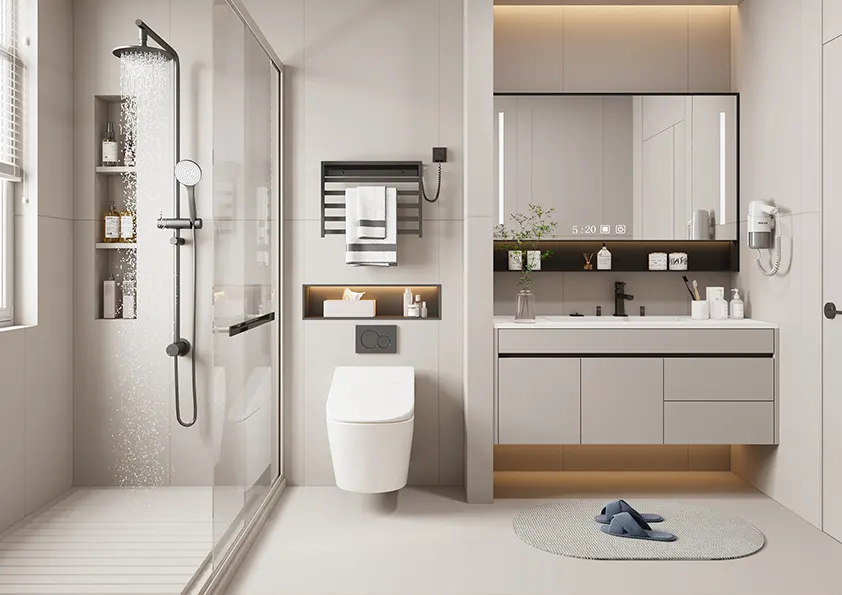
A bathroom vanity may look simple after assembly, but there are many details that need to come together correctly.
9. Packaging Is Part of the Product
For locally purchased furniture, transportation may only involve a short delivery.
For an aluminum bathroom vanity manufactured for export, the journey can be much longer.
The cabinet may travel from the factory to the port, then by sea, and finally to a warehouse, distributor, construction site or customer’s home.
That makes packaging particularly important.
A good export package needs to protect:
- Cabinet corners
- Surface finishes
- Countertops
- Hardware
- Doors and drawers
For project orders, packaging also needs to be organized so that different cabinet units can be identified and handled efficiently during installation.

What Actually Makes a Good Aluminum Bathroom Vanity?
After looking at the manufacturing process, one thing becomes clear:
The material alone does not determine the quality of a bathroom vanity.
A good aluminum bathroom vanity is the result of several things working together.
The aluminum panel needs to be suitable for the application.
The dimensions need to be accurate.
The cabinet structure needs to be stable.
The surface finish needs to be properly applied.
The hardware needs to work smoothly.
And the final product needs to be carefully assembled and packaged.
This is why two cabinets that both use “aluminum” can still have very different quality and performance.
Why Manufacturing Experience Matters
For standard products, manufacturing can follow a fixed specification.
Custom aluminum bathroom vanities are different.
Dimensions, colors, cabinet layouts, drawer configurations, countertop requirements and hardware can all change from one project to another.
The manufacturer needs to understand how these changes affect the final cabinet.
For buyers, this is one reason it can be useful to look beyond a supplier’s product photos.
Ask about the material.
Ask about the construction.
Ask about surface treatment.
Ask how customized dimensions are handled.
And, when possible, look at the actual manufacturing process.
From a Panel to a Bathroom Vanity
An aluminum bathroom vanity may look simple when it is installed in a finished bathroom.
But behind that finished product are many individual steps:
Material → Cutting → Panel Processing → Structure → Surface Treatment → Hardware → Assembly → Inspection → Packaging
Every step contributes to the final result.
For homeowners, designers, contractors and project buyers, understanding this process can make it easier to evaluate different aluminum bathroom vanity suppliers and products.
If you are looking for a custom aluminum bathroom vanity or want to understand more about aluminum cabinet construction, feel free to contact us to discuss your requirements.