
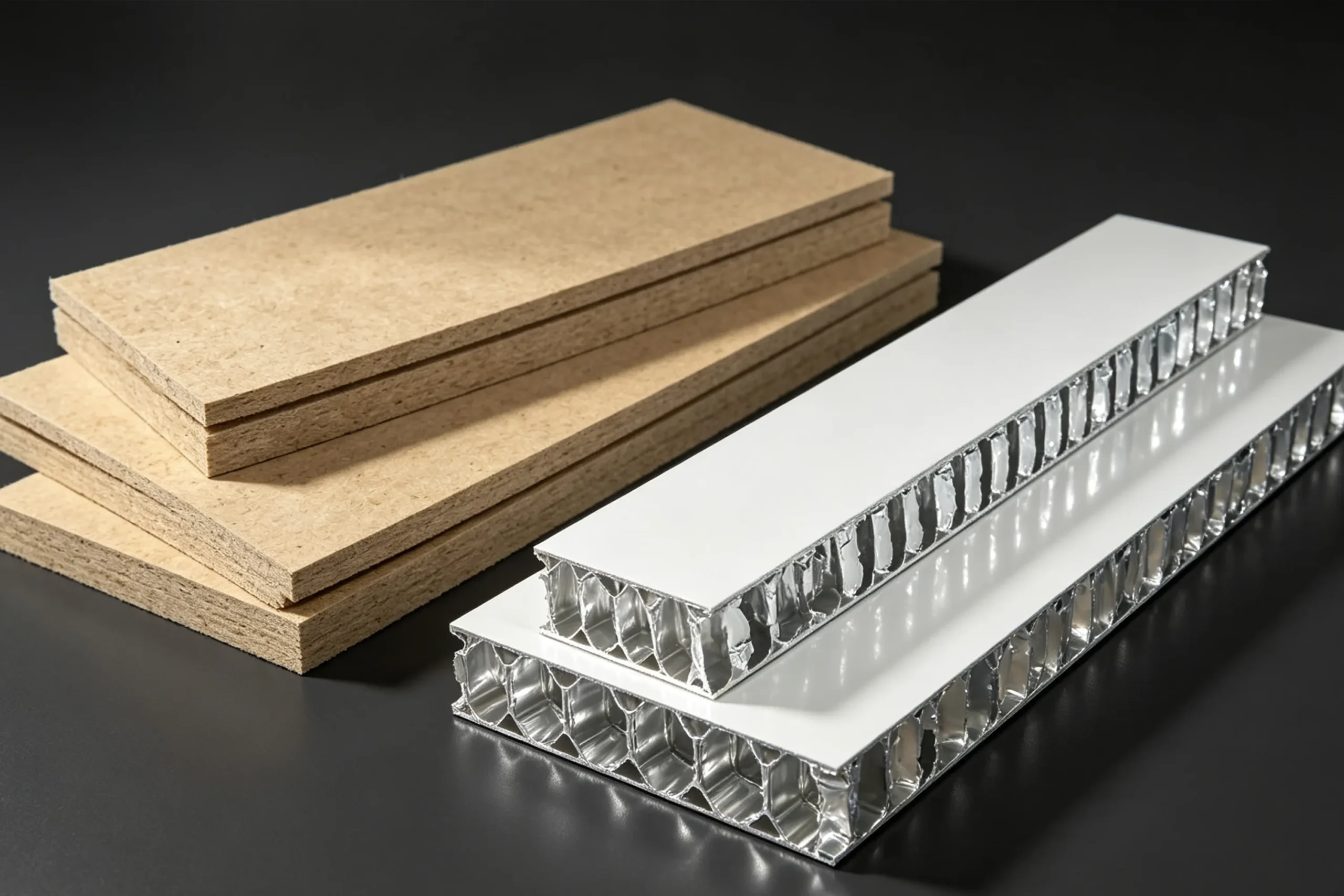
When choosing a bathroom vanity, the cabinet material is easy to overlook.
Most people start by looking at the design: the color, the countertop, the number of drawers, the cabinet size and whether the style fits the bathroom.
But the material underneath all of that can have a much bigger impact on how the vanity performs over time.
Two materials you are likely to encounter are MDF and aluminum.
MDF has been widely used in bathroom furniture for years. Aluminum, on the other hand, is becoming an increasingly interesting option for homeowners, designers and project buyers who want furniture that is better suited to humid environments.
So, which one is better?
The honest answer is: it depends on what you need from your bathroom vanity.
Instead of simply saying that one material is better than the other, let’s look at the differences that actually matter.
What Is MDF?
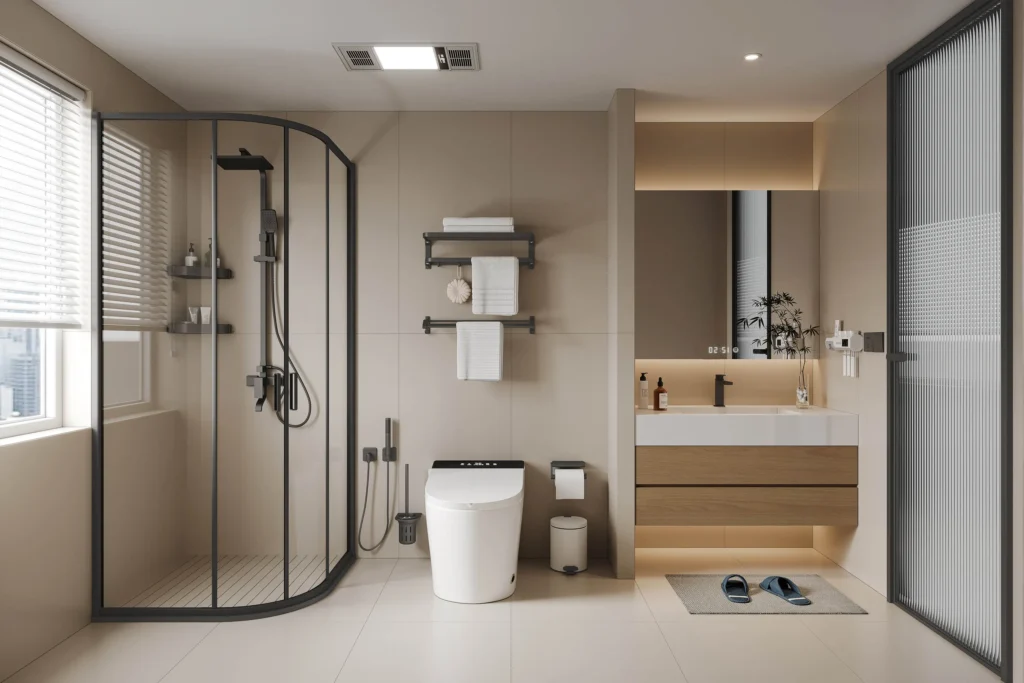
MDF, or medium-density fiberboard, is an engineered wood-based panel made from wood fibers and resin.
It is widely used in furniture because it is relatively easy to machine and can provide a smooth surface for painting, laminating and other decorative finishes.
This makes MDF a practical material for many types of indoor furniture, including bathroom vanities.
However, bathrooms are a demanding environment.
MDF itself is not designed to be continuously exposed to water. Its performance in a bathroom therefore depends heavily on the specific board, surface treatment, edge sealing and cabinet construction.
In other words, an MDF bathroom vanity is not automatically a problem, but its moisture protection deserves attention.
What Is an Aluminum Bathroom Vanity?
An aluminum bathroom vanity uses aluminum as the main material for the cabinet structure or panels.
Unlike wood-based panels, aluminum itself does not absorb water.
This is one of the main reasons aluminum is attractive for bathroom furniture.
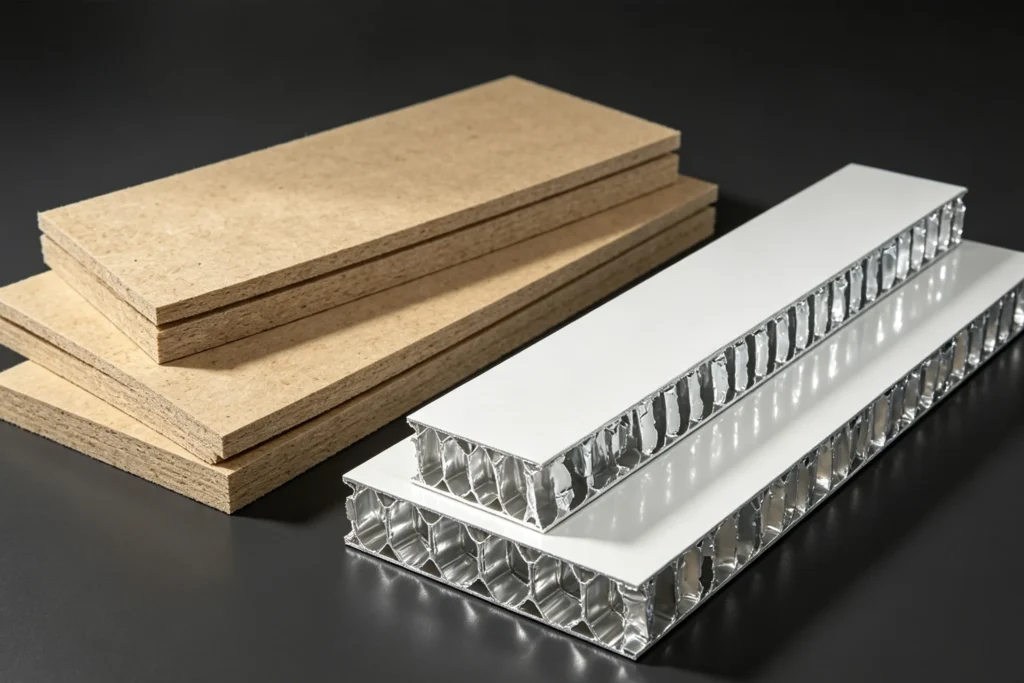
Aluminum can also be combined with different panel structures, including aluminum honeycomb panels, and finished with a range of surface treatments.
Depending on the design, an aluminum bathroom vanity can have a clean modern appearance, a solid color finish or even a wood-grain look.
So choosing aluminum does not necessarily mean choosing an industrial-looking cabinet.
Aluminum vs. MDF: What Really Matters?
The biggest difference is not simply the material name.
It is how each material behaves in the environment where the furniture will be used.
Here are the main factors worth considering.
1. Moisture Resistance
This is probably the most important difference for bathroom furniture.
A bathroom naturally contains moisture from showers, sinks, wet towels, condensation and cleaning.
Wood-based materials such as MDF can be affected by moisture if water reaches vulnerable areas or remains there for extended periods.
This is why MDF bathroom cabinets require appropriate surface protection and, especially, good edge treatment.
Aluminum has a different characteristic.
Aluminum itself does not absorb water like wood-based materials.
For this reason, an aluminum bathroom vanity can be a particularly suitable option for humid bathroom environments.
However, it is still important to remember that no cabinet should be treated as something that can simply sit in standing water.
The construction, joints, surface treatment and installation all matter.
2. Durability
Durability is another reason some buyers consider aluminum furniture.
MDF can provide good performance when it is correctly specified, protected and used in an appropriate environment.
But repeated exposure to moisture can become a concern if vulnerable parts of the board are not adequately protected.
Aluminum does not have the same moisture-related swelling behavior as wood-based panels.
For bathroom furniture that is expected to remain in service for many years, this can be a meaningful advantage.
The actual durability of an aluminum bathroom vanity still depends on the panel structure, connections, hardware, surface treatment and manufacturing quality.
Material alone does not determine the lifespan of a cabinet.
3. Edge Protection
This is one of the details that is often missed when comparing bathroom cabinet materials.
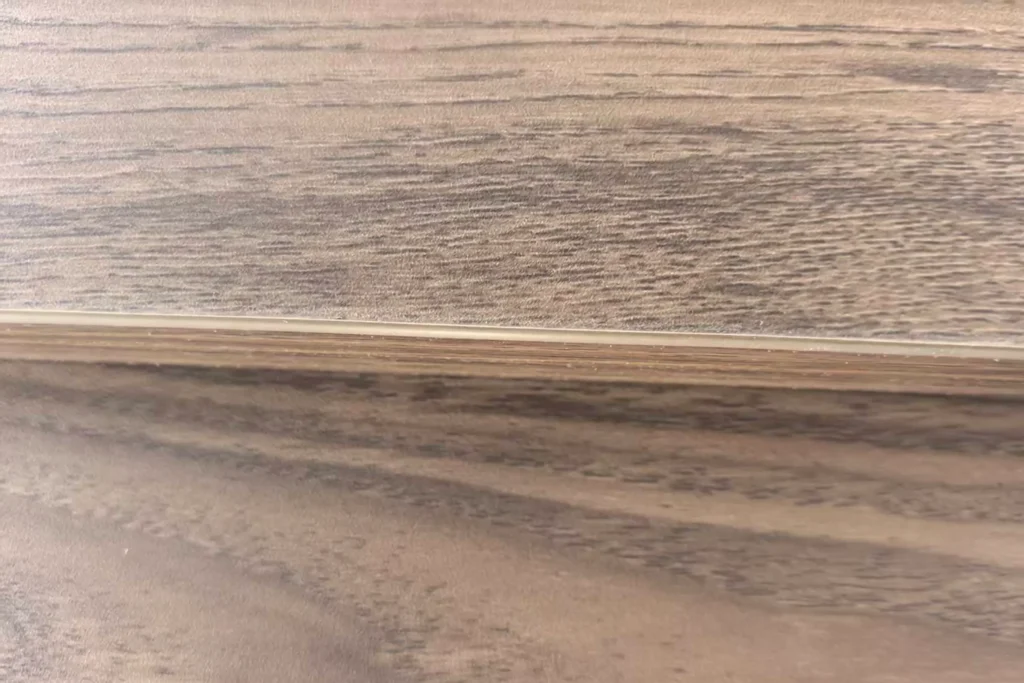
A finished vanity may look completely protected from the outside, but the edges of panels and the areas where different components meet deserve attention.
With MDF, proper edge sealing is particularly important because exposed or poorly protected edges can become vulnerable to moisture.
With aluminum panels, the material itself provides a different starting point, but the edges still need to be properly processed and finished.
A well-designed cabinet should consider the visible surfaces and the less noticeable areas together.
This is one of those details that may not be obvious when you first look at a bathroom vanity, but can matter in long-term use.
4. Cabinet Construction
The material is only one part of a bathroom vanity.
A cabinet also includes:
- Side panels
- Bottom panels
- Shelves
- Doors
- Drawers
- Connections
- Hardware
- Sink openings
- Plumbing cutouts
How these parts are connected affects the stability and usability of the finished vanity.
This is especially important for aluminum furniture because aluminum panels can be constructed in different ways.
For example, an aluminum honeycomb panel can combine aluminum skins with a lightweight honeycomb core to create a rigid panel structure.
This type of construction can be useful when manufacturers need to balance weight, rigidity and transportation requirements.
So when comparing two aluminum bathroom vanities, it is worth looking beyond the word “aluminum” and asking how the cabinet is actually constructed.
5. Maintenance
A bathroom vanity is used every day.
Water splashes, toothpaste, soap and dust can all end up on the cabinet.
For this reason, easy cleaning is an important part of practical bathroom furniture.
Aluminum surfaces are generally easy to wipe and maintain.
The exact maintenance requirements will still depend on the surface finish.
MDF vanities can also be easy to clean when they have a properly finished surface, but greater attention may be needed if water reaches damaged surfaces or vulnerable edges.
For busy households, hotels or other projects where maintenance matters, this difference can become more important over time.
6. Design Options
One common misconception is that aluminum bathroom furniture has to look like metal.
It doesn’t.
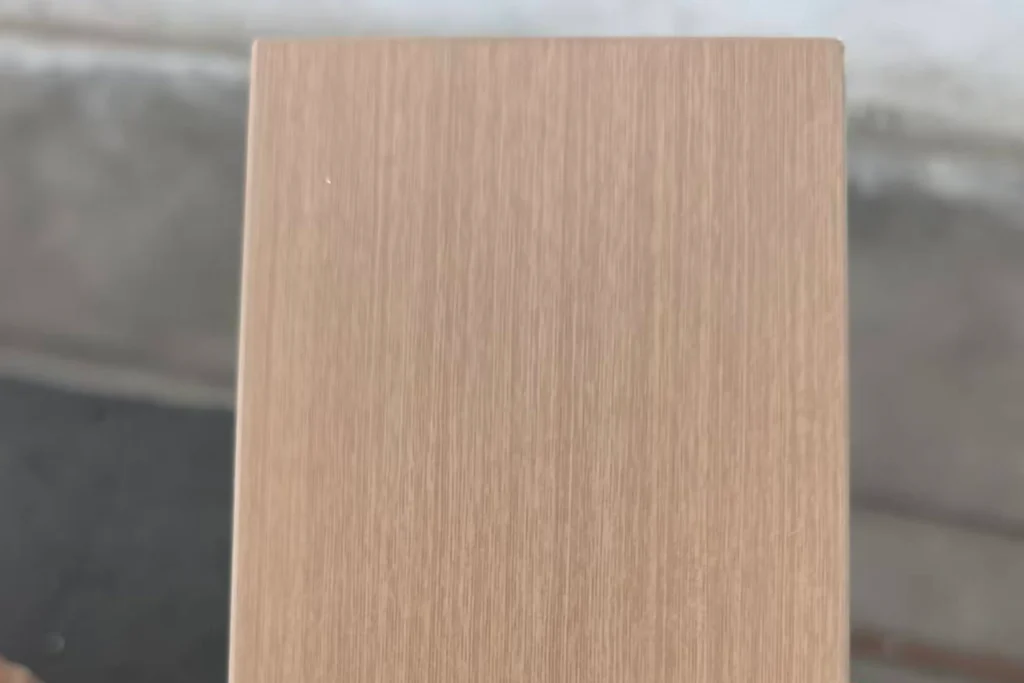
Aluminum panels can be finished in different colors, textures and decorative effects.
Depending on the product design, options can include:
- Solid colors
- Matte finishes
- Wood-grain finishes
- Decorative films
- Powder coating
This means an aluminum bathroom vanity can work with many modern interior styles.
A minimalist bathroom, for example, can use a simple matte finish.
A warmer interior can use a wood-grain appearance.
So the choice between MDF and aluminum does not necessarily have to be a choice between design and performance.
7. Weight and Transportation
Weight is another factor worth considering, particularly for project buyers and international shipping.
The final weight of a cabinet depends on its overall construction, panel thickness, hardware, countertop and other components.
Aluminum does not automatically mean that every cabinet will be lighter than MDF.
However, certain aluminum panel structures, such as honeycomb panels, can provide a useful combination of rigidity and relatively low weight.
For projects involving large quantities of bathroom vanities, transportation and installation can become important parts of the overall calculation.
8. Cost
This is where MDF often has a practical advantage.
Depending on the specification, an MDF bathroom vanity can be a more economical option.
Aluminum furniture generally requires different materials, processing methods and manufacturing equipment, so the initial cost may be higher.
But purchase price is not the only cost worth considering.
For a bathroom vanity expected to remain in use for many years, buyers may also consider:
- Maintenance
- Moisture-related problems
- Replacement frequency
- Installation
- Project requirements
- Long-term appearance
The right material therefore depends on the priorities of the project.
If initial cost is the main concern, MDF may be attractive.
If long-term moisture resistance and maintenance are higher priorities, aluminum becomes more interesting.
Aluminum Bathroom Vanity vs. MDF: Quick Comparison
| Feature | Aluminum Bathroom Vanity | MDF Bathroom Vanity |
|---|---|---|
| Moisture resistance | Excellent material-level resistance | Depends strongly on board and protection |
| Water absorption | Aluminum does not absorb water like wood-based panels | Can absorb moisture if exposed |
| Edge protection | Still requires proper processing | Particularly important |
| Maintenance | Generally easy to clean | Depends on surface and edge condition |
| Design options | Wide range of finishes | Wide range of finishes |
| Construction | Can use honeycomb and other aluminum panel structures | Commonly uses engineered wood panels |
| Initial cost | Generally higher | Generally more economical |
| Humid environments | Particularly suitable | Requires appropriate protection |
The table gives a general comparison, but the quality of the finished bathroom vanity still depends on the specific product and manufacturing process.
Which One Should You Choose?
There is no universal answer.
MDF may make sense if:
- Initial budget is the main concern
- The bathroom has good ventilation
- The cabinet will be well protected from direct water
- You are working with a conventional furniture system
Aluminum may be worth considering if:
- Moisture resistance is a priority
- The bathroom has high humidity
- Long-term maintenance is important
- You want a different approach to cabinet construction
- You are working on hotel, apartment or other project applications
- You want modern finishes without relying on wood-based cabinet materials
For some projects, MDF will be the right choice.
For others, aluminum will make more sense.
The important thing is to choose based on the actual environment and requirements rather than simply choosing the cheapest material.
The Material Is Important, But the Details Matter More Than You Think
One of the biggest mistakes when comparing bathroom vanities is looking only at the material name.
“Aluminum” does not automatically mean that every aluminum bathroom vanity is high quality.
Likewise, “MDF” does not automatically mean that a bathroom vanity will fail.
The actual product depends on:
Material + Panel Structure + Edge Treatment + Connections + Surface Finish + Manufacturing + Installation
These factors work together.
A well-designed bathroom vanity should be considered as a complete product rather than simply a collection of panels.
So, Is an Aluminum Bathroom Vanity Better Than MDF?
For a bathroom environment where moisture resistance, easy maintenance and long-term use are important, aluminum has some clear advantages.
MDF remains a practical and widely used furniture material, especially when cost is an important consideration and the cabinet is properly protected.
So the better question is not:
“Which material is always better?”
It is:
“Which material makes more sense for this bathroom and this project?”
If you are looking for a bathroom vanity that is designed around the demands of a humid environment, an aluminum bathroom vanity is certainly worth considering.
At Makorohome, we develop modern aluminum bathroom vanity solutions for residential and project applications, with different panel structures, sizes and surface finishes available.
If you are comparing aluminum and MDF for a bathroom project, we can discuss the cabinet structure, dimensions, materials and finish based on your requirements.