
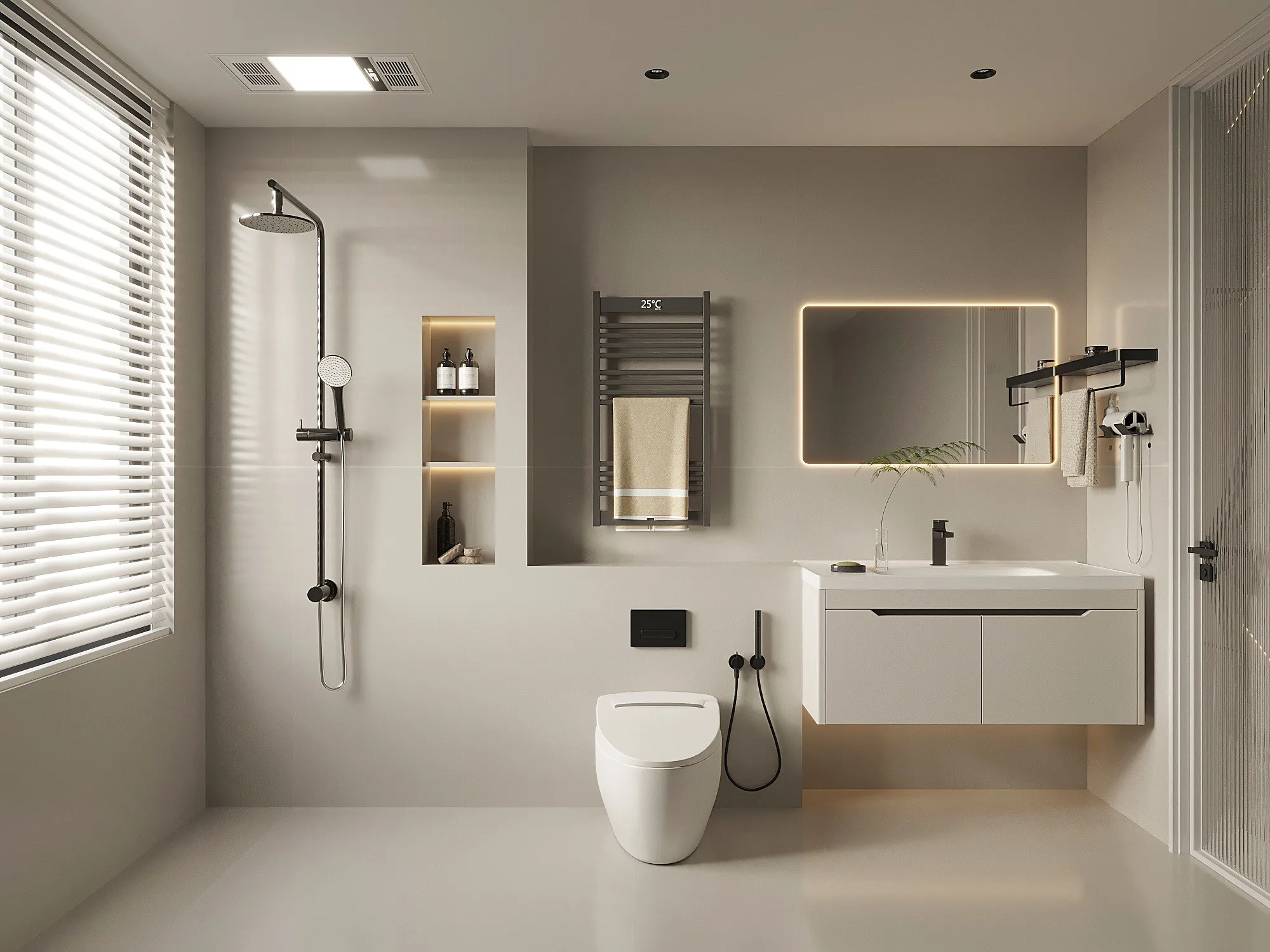
A bathroom vanity needs to fit the space properly, but getting the right final result also depends on how the cabinet is assembled and installed.
For custom projects, dimensions, cabinet configuration, hardware, countertop requirements, and installation conditions all need to be considered before production.
This installation shows the process of putting an aluminum bathroom vanity into its final position, from cabinet assembly to the completed installation.
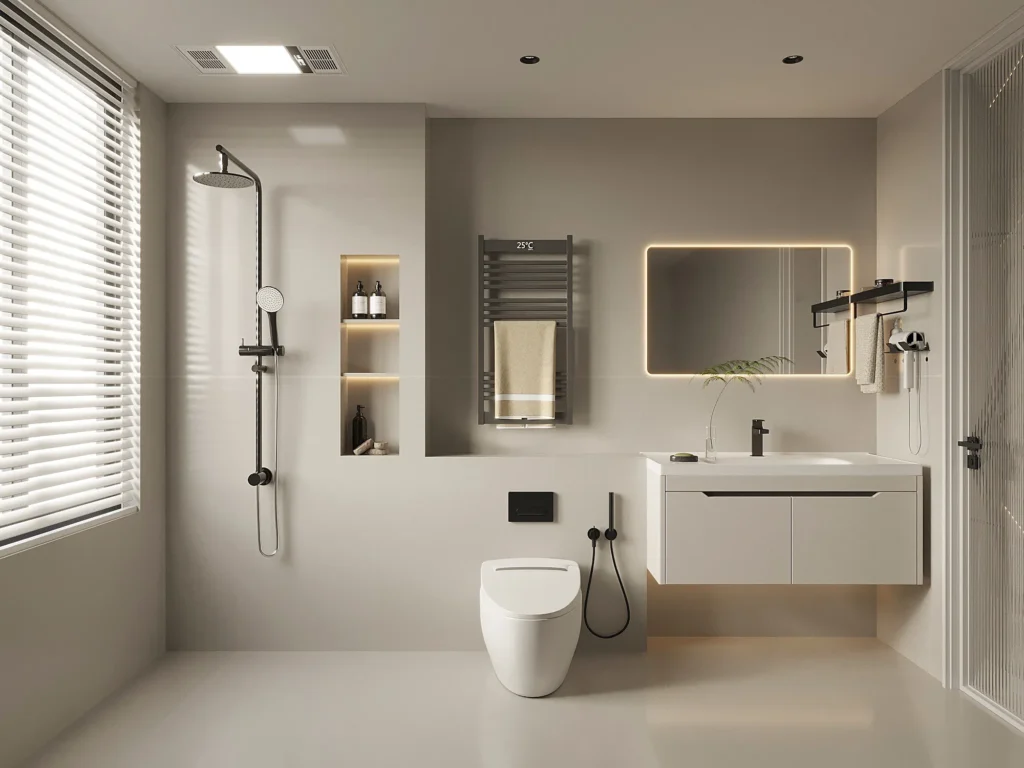
1. Preparing the Bathroom Space
Before installing a bathroom vanity, the available space needs to be checked carefully.
The position of the water supply, drainage pipe, wall, floor, and surrounding fixtures can all affect the cabinet dimensions and installation method.
For custom bathroom projects, these details are normally confirmed before production.
This helps avoid problems such as insufficient clearance, interference with plumbing, or incorrect cabinet dimensions during installation.。
2. Assembling the Vanity Cabinet
Once the components are ready, the cabinet can be assembled according to its configuration.
The cabinet structure needs to remain square and stable during assembly. Connections, panels, drawers, doors, and other components are installed according to the design.
For an aluminum bathroom vanity, the cabinet structure is based on aluminum components rather than conventional wood-based cabinet boards.
This makes the material suitable for bathrooms and other areas where moisture is part of everyday use.
3. Installing Hardware and Storage Components
Hardware is another important part of the installation.
Depending on the project, the vanity can be configured with drawers, doors, hinges, drawer slides, handles, and other storage components.
The hardware configuration can also be adjusted according to the customer’s requirements.
For B2B projects, this allows the same basic cabinet concept to be adapted to different bathroom layouts, storage requirements, and project specifications.
4. Positioning the Bathroom Vanity
After the cabinet has been assembled, it is positioned according to the planned installation location.
The cabinet needs to align properly with the surrounding walls and plumbing.
For floor-standing vanities, the cabinet and supporting feet need to be positioned correctly.
For wall-mounted designs, the fixing points and wall conditions need to be considered before installation.
The installation method therefore depends not only on the vanity itself, but also on the actual bathroom environment.
5. Fitting the Countertop and Basin
Once the cabinet is in position, the countertop and basin can be fitted.
The countertop dimensions need to match the cabinet dimensions and the selected basin configuration.
For custom orders, cabinet width, depth, basin size, countertop requirements, and installation conditions can be confirmed before production.
This is particularly important for project orders, where multiple bathroom vanities may need to follow the same dimensions and configuration.
6. Checking the Final Installation
After installation is completed, the cabinet, drawers, doors, hardware, countertop, and surrounding connections should be checked.
The vanity should open and close smoothly, remain stable, and provide enough clearance for normal use.
A final inspection also helps identify small adjustments that may be needed before the bathroom is put into daily use.
The installation process may look simple from the outside, but accurate dimensions and proper preparation make a significant difference to the final result.
Designed for Custom Bathroom Projects
An aluminum bathroom vanity can be customized for different bathroom layouts and project requirements.铝制浴室梳妆台可以根据不同的浴室布局和需求进行定制。
Depending on the application, customization can include:
- Cabinet width and depth
- Floor-standing or wall-mounted configuration
- Drawer and door layout
- Hardware configuration
- Countertop and basin matching
- Surface finish
- Storage requirements
For residential developments, hotels, apartments, furniture brands, distributors, and other B2B projects, these details can be adjusted according to the specific application.
A Bathroom Vanity Is More Than Its Appearance
The finished vanity is only one part of the product.
Behind the final appearance are the cabinet structure, material selection, hardware, dimensions, manufacturing accuracy, and installation requirements.
For buyers sourcing custom bathroom vanities, understanding these details can make it easier to evaluate different suppliers and choose a configuration that fits the actual project.
At Makorohome, we focus on customizable aluminum furniture for B2B applications, including bathroom vanities, kitchen cabinets, and wardrobes.
Looking for a custom aluminum bathroom vanity for your next project? Contact us to discuss your dimensions, configuration, and requirements.