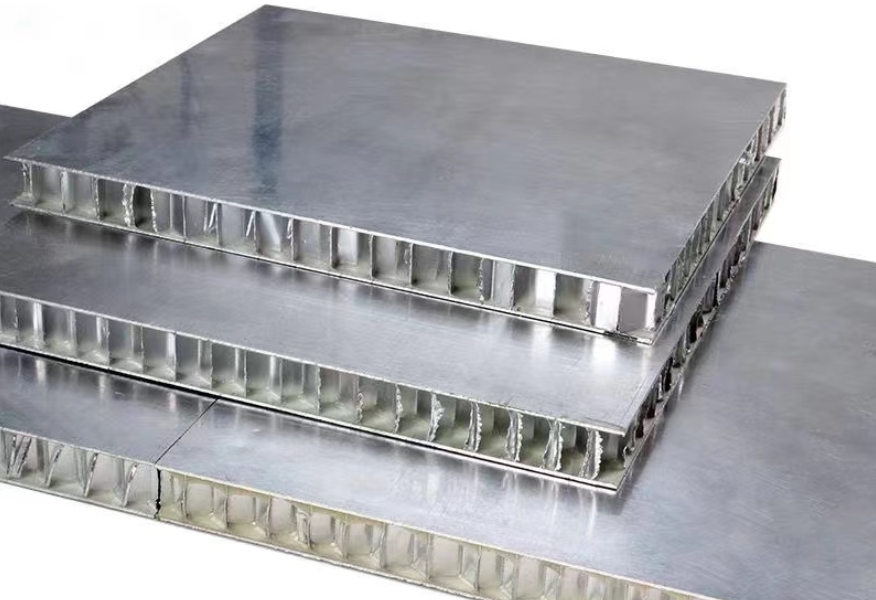
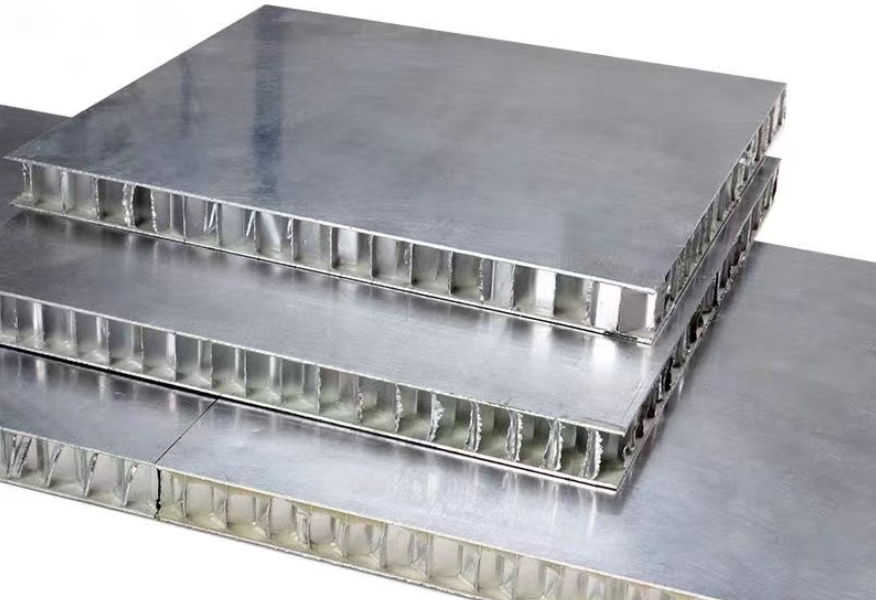
Aluminum honeycomb panels have become the core material of modern all-aluminum home furniture, widely used in custom wardrobes, kitchen cabinets, bathroom vanities, balcony cabinets, and storage furniture. Compared with traditional wooden and board materials, aluminum honeycomb panels feature zero formaldehyde, excellent waterproof and moisture-proof performance, high flatness, and stable structural durability. However, the quality of honeycomb panels varies greatly on the market, mainly due to differences in internal sandwich structure, aluminum alloy grades, aluminum skin thickness, and honeycomb core specifications. Many buyers and even dealers only focus on the total panel thickness while ignoring key internal configurations, which easily leads to low-quality and downgraded furniture materials. This article systematically explains the professional structure of standard aluminum honeycomb panels, the essential differences between 1-series and 3-series aluminum alloys, and the practical influence of different panel thicknesses and honeycomb core sizes, helping you accurately identify high-quality all-aluminum honeycomb panels.
Authentic all-aluminum honeycomb panels adopt a classic and mature three-layer sandwich structure, composed of an upper aluminum face sheet, a lower aluminum back sheet, and an integral aluminum honeycomb core in the middle. The whole panel is made of pure aluminum materials without any wood, plastic, or filler, and is formed through high-temperature PUR hot-press composite technology. The upper decorative aluminum sheet determines the surface flatness, dent resistance, texture performance, and finishing effect of the panel, supporting various processes such as wood grain transfer and matte spraying. The bottom back sheet plays a vital role in balancing structural stress, effectively preventing the cabinet door from warping, twisting, or deforming after long-term use. The middle hexagonal aluminum honeycomb core serves as the main support layer. Its unique honeycomb geometric structure provides ultra-high structural stability and compression resistance with ultra-light weight, realizing the lightweight and high-rigidity characteristics of large-sized cabinet panels and solving the sagging and deformation problems of traditional large furniture boards.
In the domestic all-aluminum furniture industry, the aluminum sheets used for honeycomb panel surfaces are mainly divided into two categories: 1-series pure aluminum alloy and 3-series aluminum-manganese anti-rust alloy, and the performance gap between the two materials is extremely obvious. The 1-series aluminum represented by 1100 is high-purity pure aluminum with extremely low alloy content. It has good ductility and is easy to bend and process, with low raw material cost. However, the material is soft in texture, poor in impact resistance and anti-depression ability, and large-sized cabinet doors are prone to surface denting and honeycomb pattern penetration after long-term use. In addition, its anti-corrosion performance is average, and it is not suitable for long-term use in humid environments such as bathrooms and balconies. It is mostly used in low-cost and entry-level low-end honeycomb panels on the market.
In contrast, the 3-series aluminum-manganese alloy represented by 3003 and 3004 is the officially recognized standard material for high-grade aluminum honeycomb panels. By adding manganese elements, the alloy greatly improves hardness, tensile strength, impact resistance and anti-rust performance. Honeycomb panels made of 3-series aluminum sheets can maintain long-term flatness without deformation or honeycomb penetration marks even for super-tall cabinet doors. With excellent moisture-proof and anti-corrosion properties, it can stably adapt to high-temperature and humid scenarios such as kitchens, bathrooms and balconies, and is widely used in high-end architectural curtain walls and industrial decorative panels. Although the cost is slightly higher than 1-series aluminum, it is the most orthodox and reliable material choice for household all-aluminum customized furniture.
In addition to alloy grades, the thickness of the aluminum skin is another key factor affecting panel quality, far more important than the total panel thickness. The market is divided into thin aluminum skins, conventional balanced thickness, and thickened aluminum skins. Thin aluminum skins of 0.3mm to 0.5mm are ultra-low in cost, but the surface is soft and easy to dent, and large panels are prone to obvious honeycomb texture penetration, which is common in low-end engineering panels. The conventional thickness of 0.6mm to 0.8mm is the most suitable specification for household furniture, perfectly balancing weight, hardness, flatness and cost performance, and can meet the long-term use needs of most wardrobes, cabinets and balcony cabinets. The thickened aluminum skin above 1.0mm has stronger impact resistance and deformation resistance, suitable for ultra-large customized cabinet doors and heavy-duty furniture, with higher overall stability and service life. It is worth noting that high-quality honeycomb panels must have symmetrical thickness of front and back aluminum sheets. If the front panel is thick while the back sheet is too thin, the internal stress will be unbalanced, resulting in overall warping and deformation of the board in the later stage.
The honeycomb core specification also directly determines the supporting force and flatness of the panel. The two mainstream core sizes in the industry are 3*3mm and 4*4mm hexagonal honeycomb cores. The 3*3mm honeycomb core has denser grids and more uniform structural support. Under the same aluminum foil thickness, it has stronger compression resistance and stability, effectively avoiding surface honeycomb marks, and is the preferred core material for high-end customized honeycomb panels. The 4*4mm honeycomb core has larger grids and lower density, with slightly weaker supporting performance, but higher cost performance, suitable for conventional small-sized cabinet boards. It should be emphasized that the quality of the honeycomb core cannot be judged only by the grid size. The thickness of the aluminum foil of the core is equally important. A thin-foil 3*3mm core is inferior in stability to a thick-foil 4*4mm core. Meanwhile, different honeycomb core heights determine the overall thickness and bearing capacity of the panel. High-height cores match high-strength aluminum skins to achieve higher bending resistance, meeting the production needs of different furniture panels.
To sum up, high-quality standard all-aluminum honeycomb panels must adopt a formal three-layer sandwich full-aluminum structure, matched with orthodox 3-series 3003/3004 aluminum-manganese alloy panels and back sheets, with a reasonable aluminum skin thickness of 0.6mm to 0.8mm and high-density 3*3mm thick-foil honeycomb core. Choosing qualified honeycomb panel configurations can completely avoid common problems such as panel softness, denting, penetration marks, warping and mildew, ensuring durable, stable and high-grade presentation of all-aluminum furniture.